Similar to my adventures into miso, I didn't really know much of anything about koji before deciding to get started. But why would I let that stop me.
Wow, this was way too much rice. Why did I use my last 2 cups of rice? I have never even made 2 cups of rice.
March 28, 2020 (Remember, social distancing)
Okay, so maybe I didn't need to use my last two cups of rice to (try to) make koji, but that just proves my dedication to my craft (or my foolhardiness). Either way, I realized that I needed more koji than I had purchased online. Because my soybeans were already hydrating, I was committed. I did search online for some info on how to start a koji culture, and didn't find what I was hoping for. Most of the guides I found stated that it was important to have a spore culture of koji-kin before growing koji. The mold, Aspergillus oryzae, grows quite easily and can be grown from a wild fermentation, but this is not recommended. Another site mentions briefly that you can mix your purchased koji with prepared rice instead of using a culture of spores. Without further info I jumped in! I followed the instructions Instructables gave for using spores but just replaced the spores with a small amount of the koji I purchased.
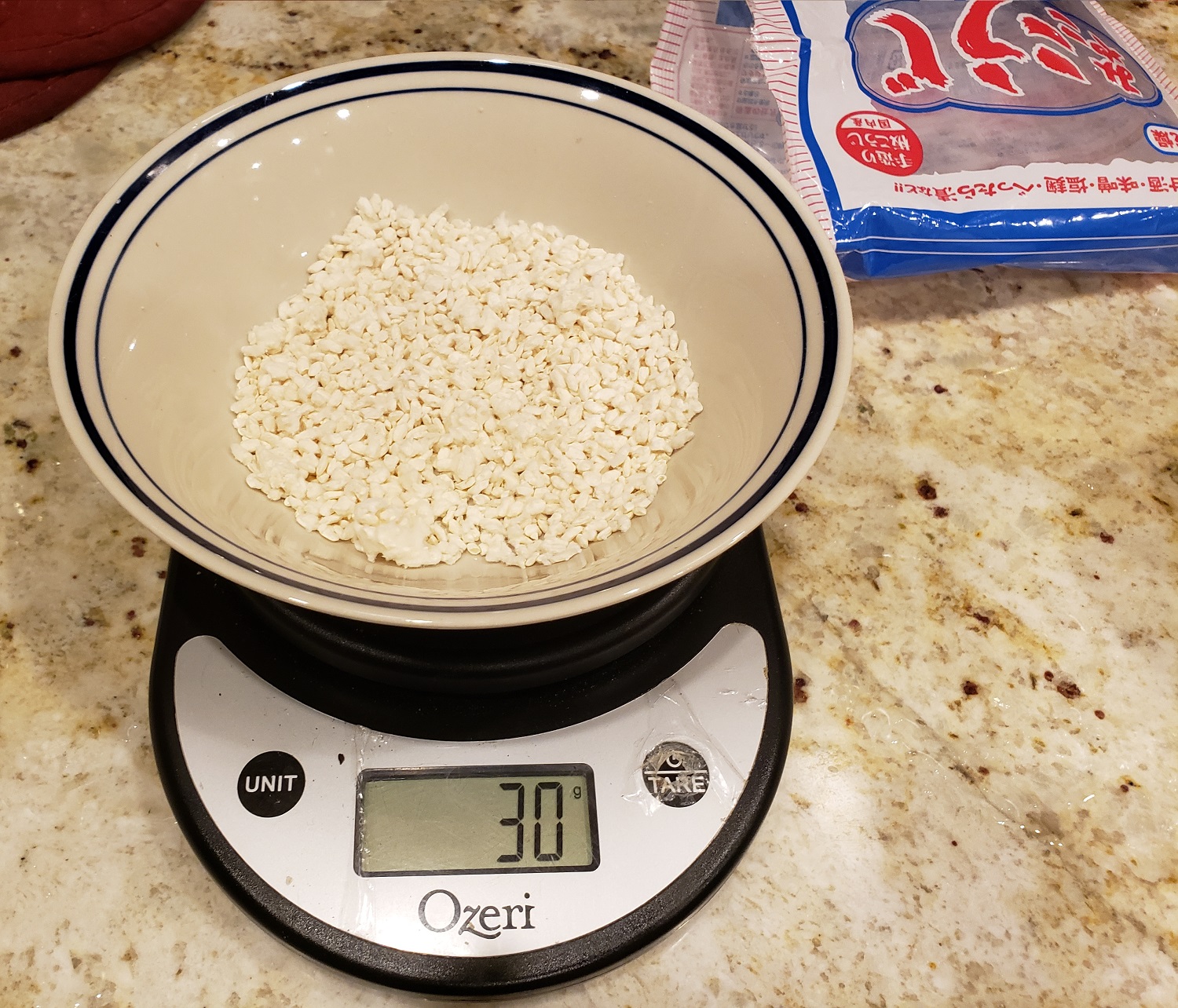
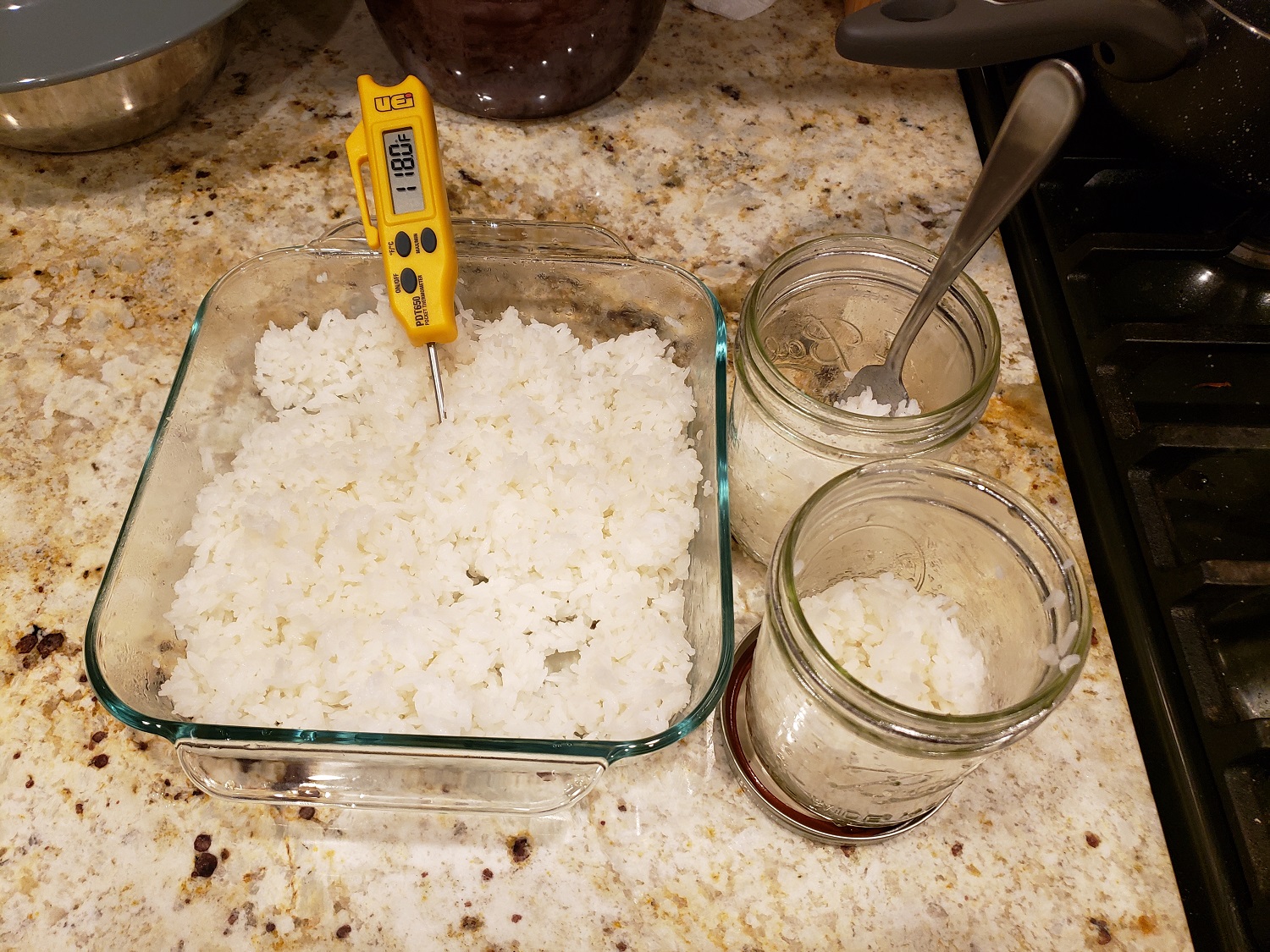
I only used 30g to make for a more round number to use for making miso. The two cups of rice mentioned above made for a large bed for the koji. I cooked it more than I would prefer to eat, assuming that the grains would open up a bit for the mold to get a strong foothold. I wasn't very gentle with the rice or the koji. They don't need whole rice grains to grow, they will be happy with just about any substrate.
Because I had SO MUCH rice, I split some inoculated rice into Mason jars. Hopefully, the tray and jars will grow mold, but I will leave the jars for another day or two so they begin to spore (for easier growth next time). My expectations aren't very high based on the warnings of others. Luckily, I already have practice setting the temperature of my incubation chamber from making yogurt! Koji should be kept around 90°F and high humidity. I have no way to avoid near 100% humidity with my current setup, but I will not try to fix that now. I heated water (not to boiling, but about 150°F) and preheated the chamber before adding the tray and jars, with towels draped over them.
March 29, 2020
Things look good to start the day! Upon opening the lid of the cooler-turned-fermenter I can smell the slightly fruity aroma of the koji. The tendrils of mold are difficult to see on camera, but quite stark in person. I am impressed how well the mold is spread across the surface of the rice. It barely passed below the surface layer, but the entire surface is COATED.