I had committed myself to making miso before I really knew what my plan was. I, of course, was inspired by Brad Leone on Bon Appetit and wanted to jump right in. Here are a few simple steps to follow exactly what I did:
- Purchase fermentation crock (cookie jar from thrift store)
- Buy a kilo of dried soybeans (very cheap)
- Soak entire kilo of soybeans in water (obviously I needed to use the entire bag without thinking)
- Slowly reevaluate your choices as the soybeans pour out of the container
- Use only 1 quarter of the soaked soybeans, store others in a bag for later use...
- Start to look up recipes now and find that you should have known all along that you didn't need that many soybeans
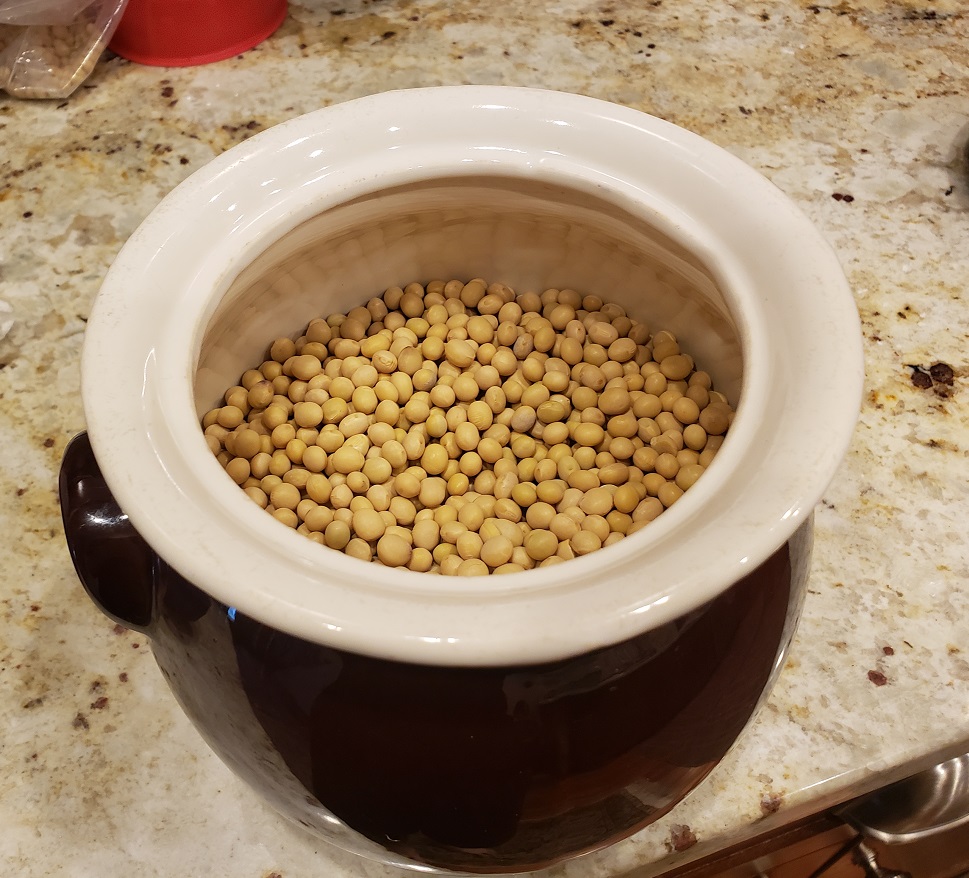
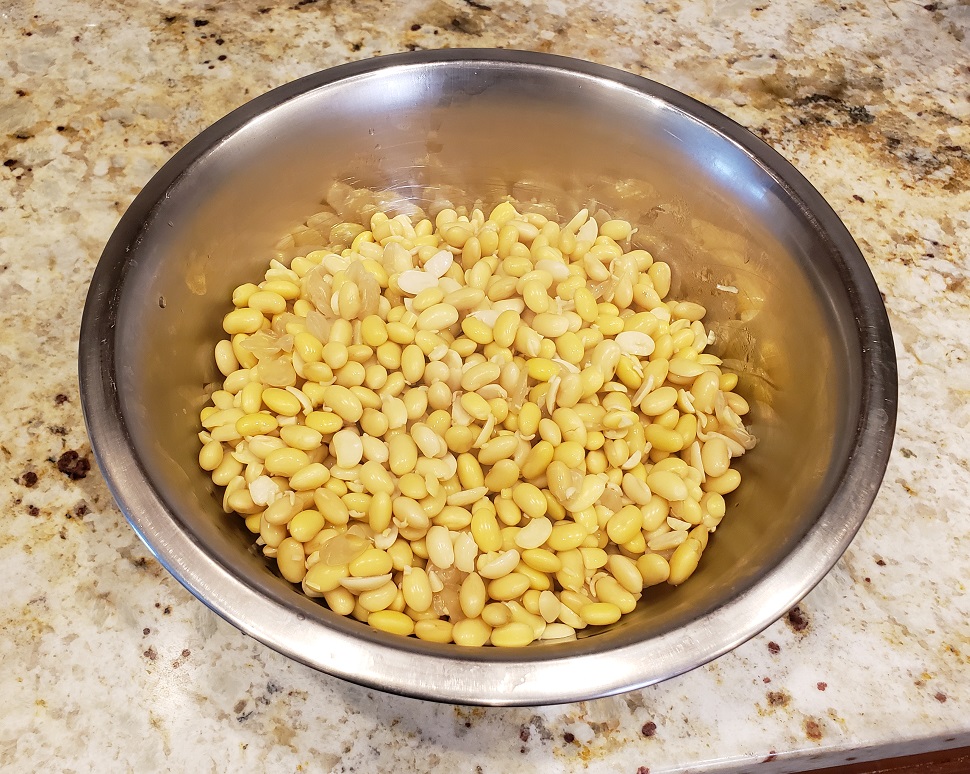
So there I was (and still am) with a lot of extra soybeans and not enough facilities to turn them all into miso. I had another big problem:
Koji rice is rice inoculated with the mold Aspergillus Oryzae and it is essential to making miso, soy sauce, and sake. I purchased some koji rice online (loca Asian market did not have it) and assumed I had enough for what I wanted. This, of course, proved incorrect very quickly after searching for a recipe. (Note: in my search I came across Sandor Katz and decided to purchase his book, The Art of Fermentation, but that isn't gonna help me as I figure this out.) A few sites gave different suggestions for ratios, so I just sorta averaged them and made up some numbers that allowed me to use nearly my entire culture of koji.
- 250 g dry soybeans, soaked overnight then boiled for 30 minutes
- 125 g pickling salt, dissolved in 1 cup of bean cooking liquid
- 200 g koji
The package of koji came with 230 g, read here to find out why I didn't use it all for miso.
Great! Everything seems like it is sorted out!
Not quite. Mashing the beans was much more difficult than I thought when unaided by a potato masher. I made do with a fork at first, but quickly switched to chopping with a knife. After getting it all processed, I mixed in the koji and saltwater before transferring everything into my fermentation crock/cookie jar. I sprinkled some extra salt onto the surface as a protective layer.
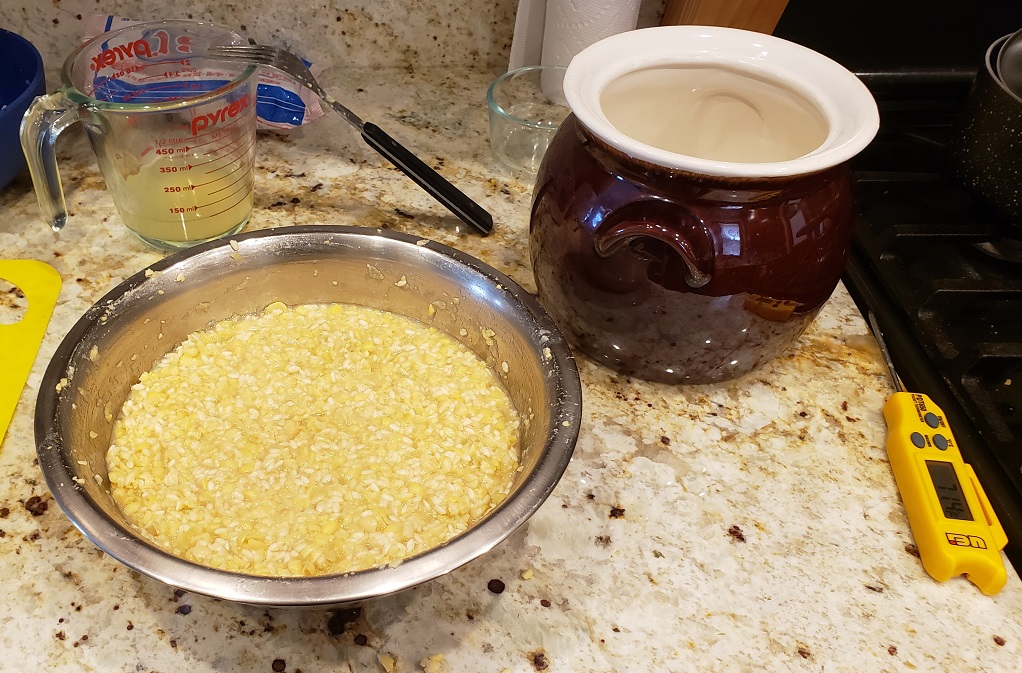
Because I did not buy a nice fermentation crock, I do not have convenient weights to press the contents of the jar. I cut a piece of cardboard to match the approximate area of the surface, cut it in half (remember that a circle is the only simple polygon that cannot fall into a hole of its own shape and size, think manhole covers) and placed a ziploc bag full of water on top. My lid fits okay, but I wrapped it in plastic wrap to make a sort of gasket anyway...we really do not want oxygen present at all, otherwise we will almost certainly encounter mold.
Make sure to sit and watch, it's almost done!
Not quite. I don't really know how long this will take to get where I want. I should know after a few weeks if I am on the right track or if I got my proportions way wrong. My goal is to have solid miso paste in 6 months. Until then, I will check in and pull of the liquid tamari when the opportunity arises. I also want to start a second fermentation and make a few changes.